Drone in a box
You own the drone and fly it with your own staff. We provide the approval, the training and the operational structure, so the system is in operation from day one.
How it works
The system stays on your site and flies from the dock. You run the missions from a browser, and everything happens under our approval.
The dock
Stays on site. It charges the drone between flights, shelters it from the weather and has backup power.
The drone
Takes off from the dock and flies set routes, or is sent out when something happens. It carries a parachute and can fly beyond visual line of sight.
The controls
Missions are planned and followed in a browser. Photos, video and thermal data are kept in one place.
Your staff
Fly the missions and use the data in their own work, trained by us.
Under Inotek's approval
Approval, daily monitoring, manuals, emergency response plan, airspace, training and support.
Who does what
- First in Norway with a generic area approval for DJI Dock
- Approved for BVLOS with an automated dock
- In operation for several clients
| Area | Inotek does the work | You fly |
|---|---|---|
| System | Supplies, installs and sets up the system, with parachute, airspace monitoring and backup power | Own the dock and the drone |
| Daily operation | Operational responsibility and daily monitoring of the operations. You fly under our approval | Fly the missions with your own checked-out staff |
| Training | Courses in the operations manual, BVLOS, night flying, ERP, mission control and maintenance. Annual certification and further training | Staff hold A1/A3 and have passed the STS exam |
| Airspace and occurrences | Airspace coordination, NOTAM and GeoZone, occurrence handling and technical support | Follow the procedures and report occurrences |
| Documentation | Keeps the approval, manual and emergency response plan up to date with regulatory requirements | Use the manuals |
Examples of use
- Condition monitoring
- Fixed routes over roofs, facades, cranes, quays and technical installations. The same route gives comparable images, so changes over time become visible.
- Site security
- Planned patrols along fences and boundaries with visual and thermal cameras. Damage to the fence and objects too close to it are picked up.
- Incidents and emergencies
- The drone can be sent out when something happens and gives an up-to-date picture before staff are on site. The images document the incident afterwards.
- Fire and heat
- Regular thermal rounds give early warning of overheating in buildings, tanks and equipment.
- Environment and leaks
- Inspection of tanks, pipelines and storage areas, and detection of spills on water.
- Large construction projects
- The system can stay on a construction site for as long as the project lasts. It documents progress, gives an overview of the site and tracks earthworks and stockpiles.
- Volumes
- Regular flights over gravel pits, quarries and storage areas give the volumes of the stockpiles without manual measurement. Repeated flights track the volumes over time.
Examples from our work
A selection of findings from four of the inspections we currently fly: light masts, fences, fire hydrants and muster points. The photos and descriptions come from the inspections.
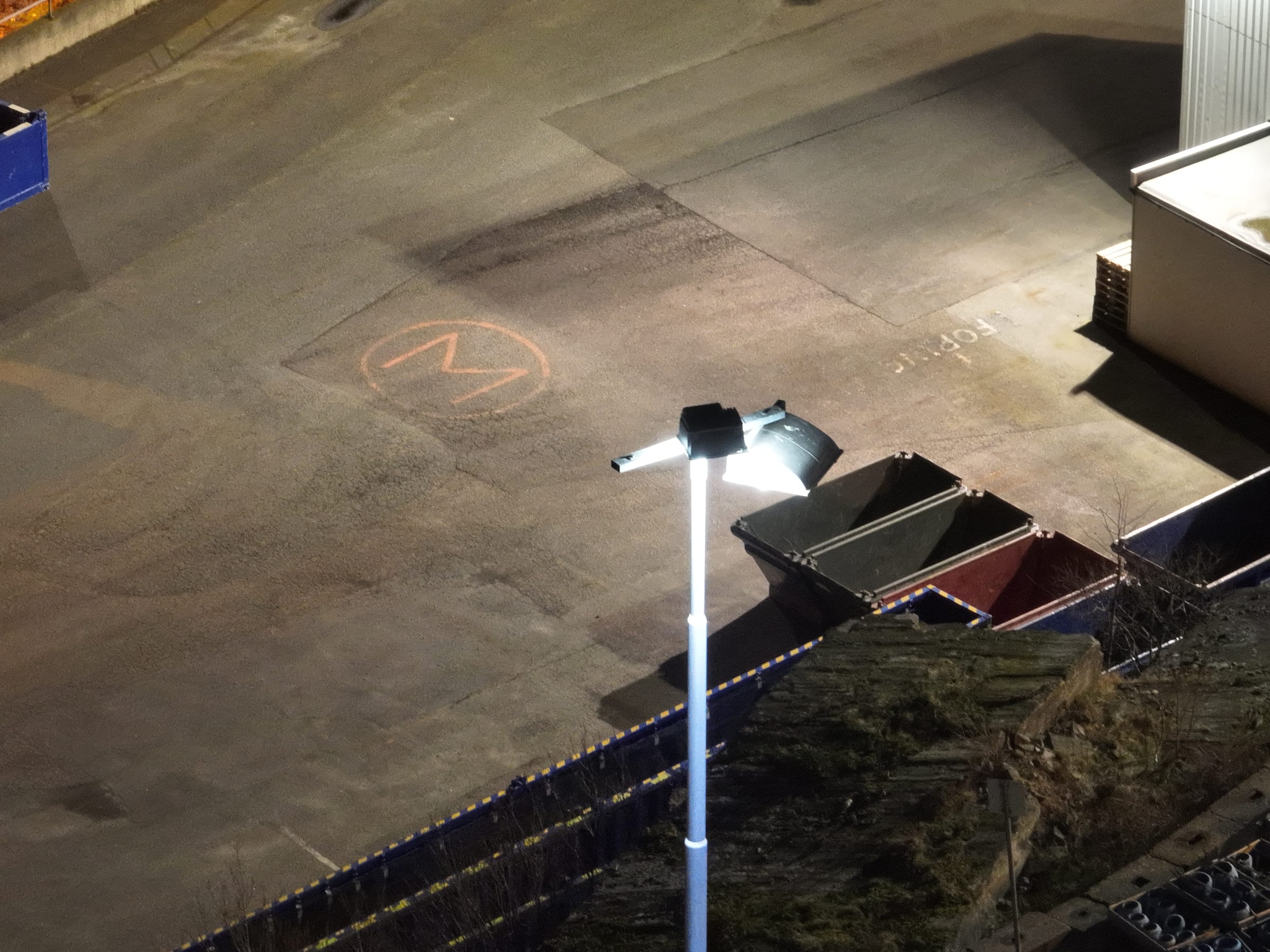
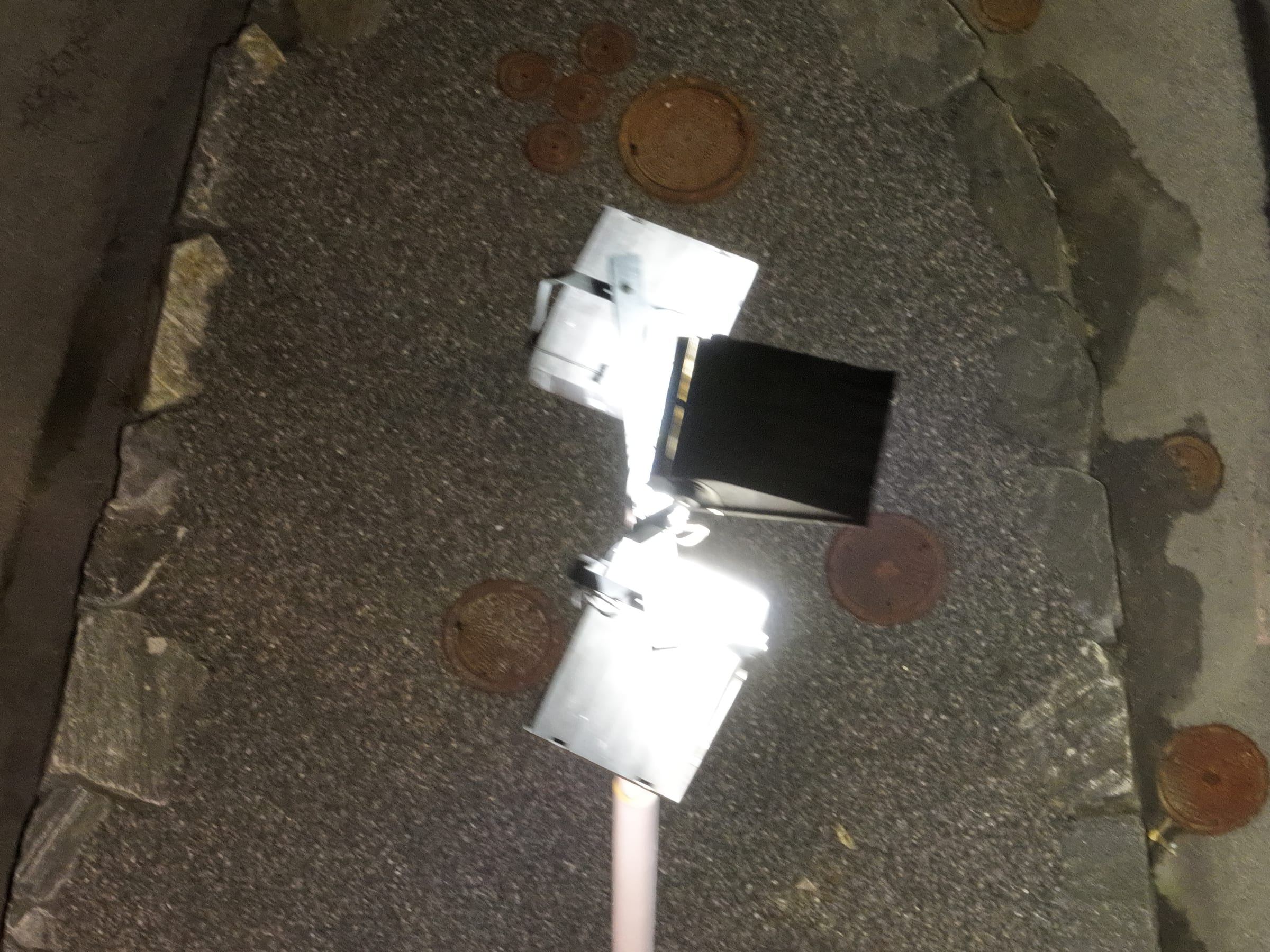
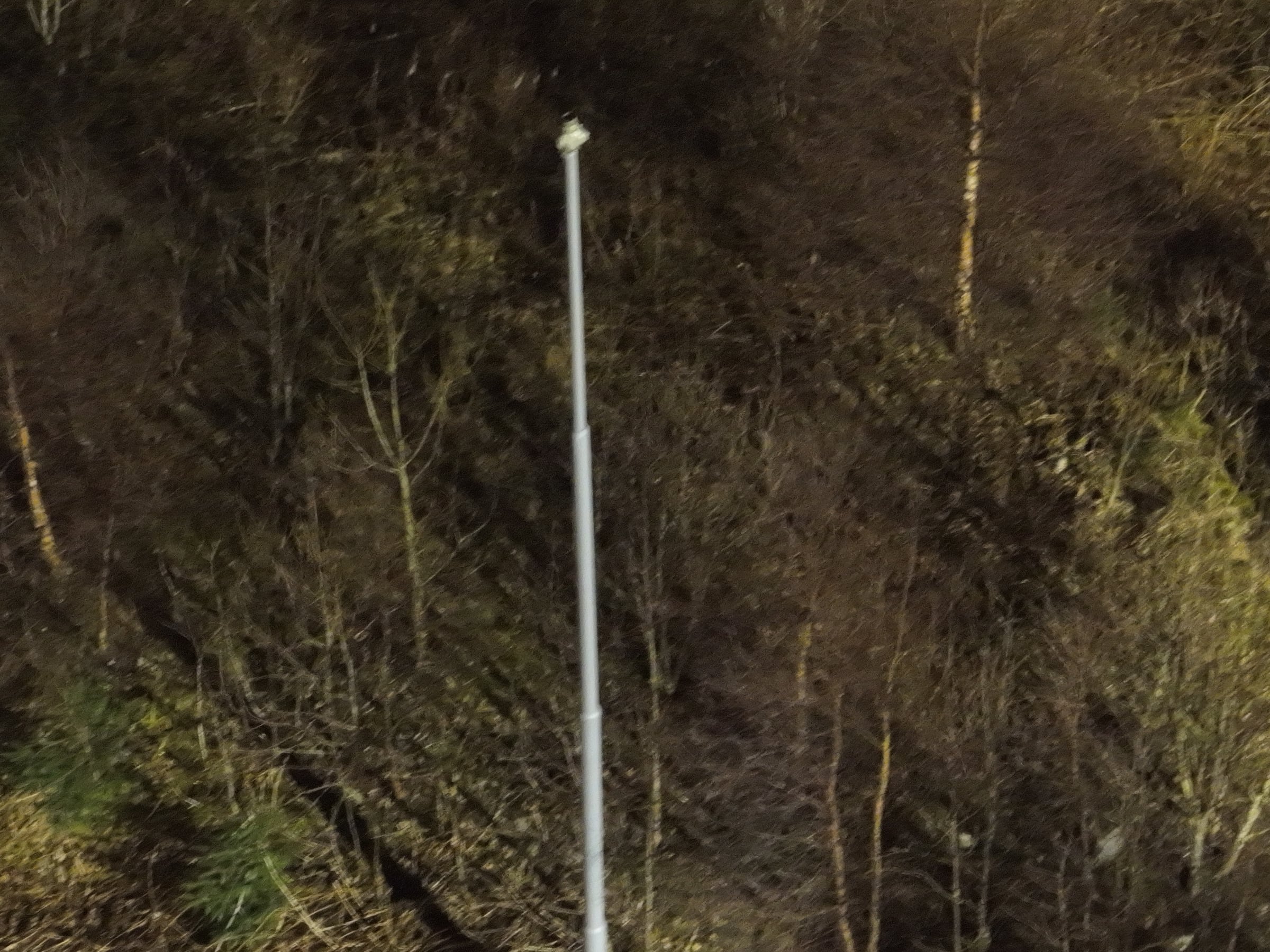
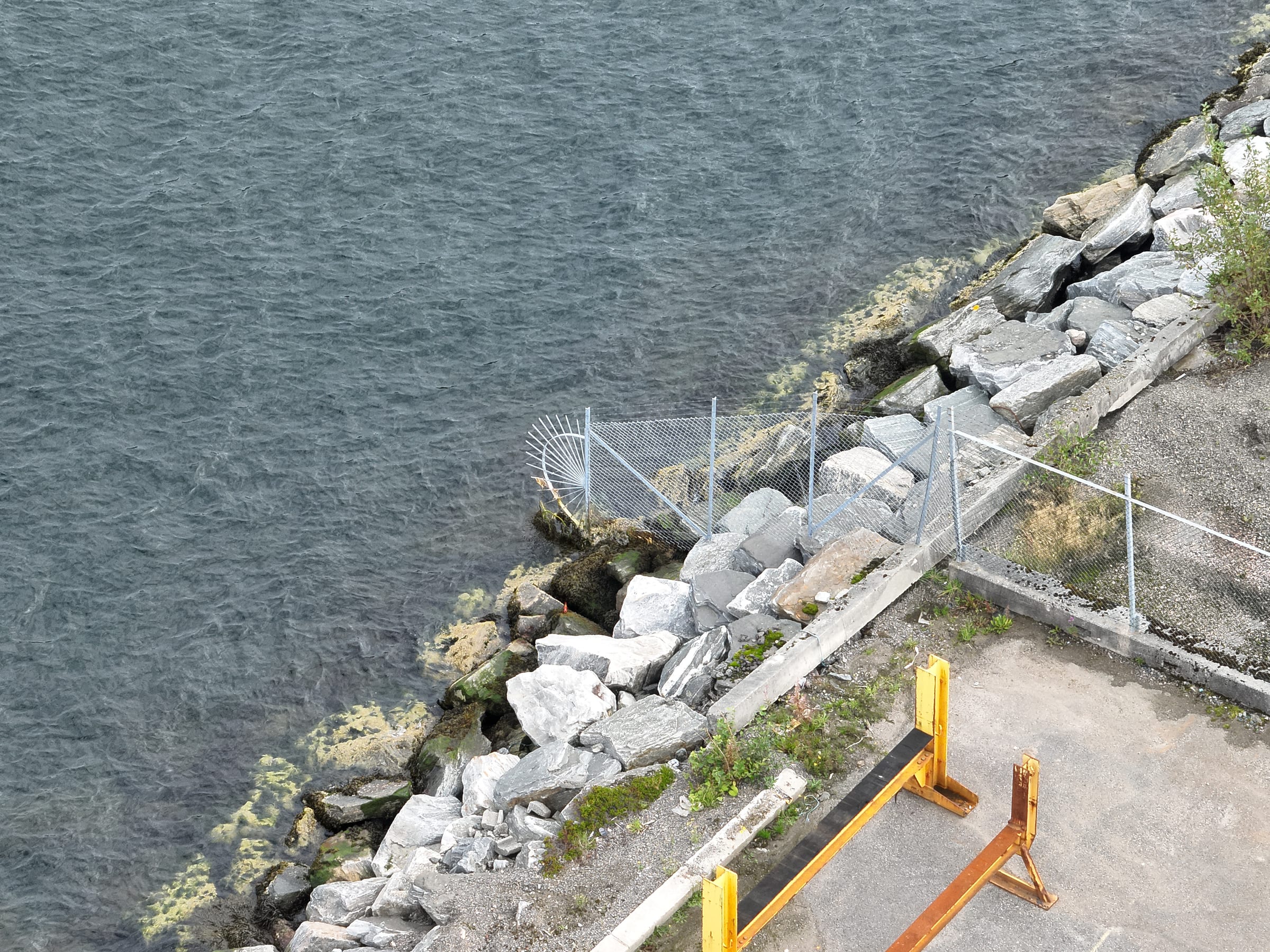
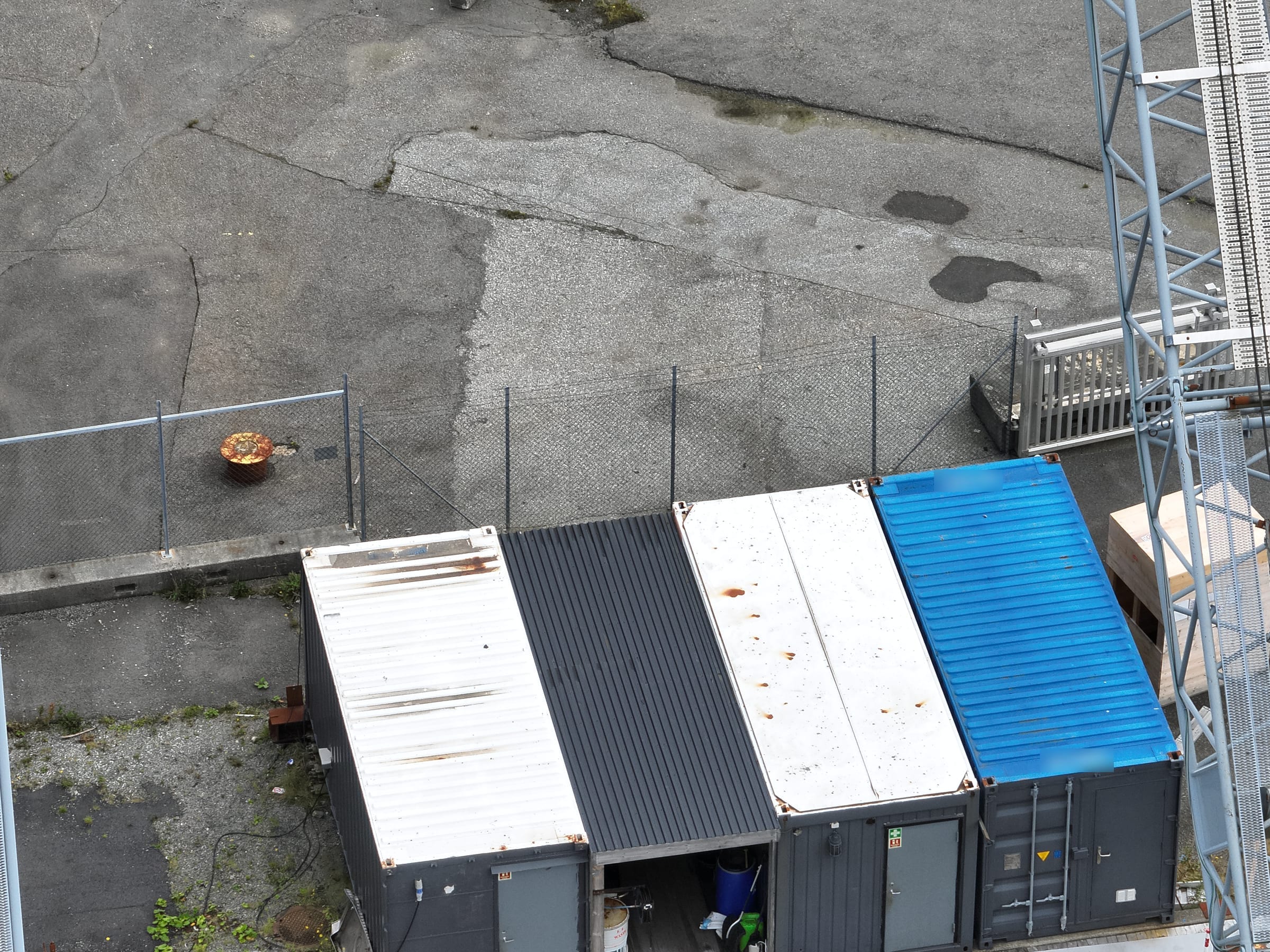
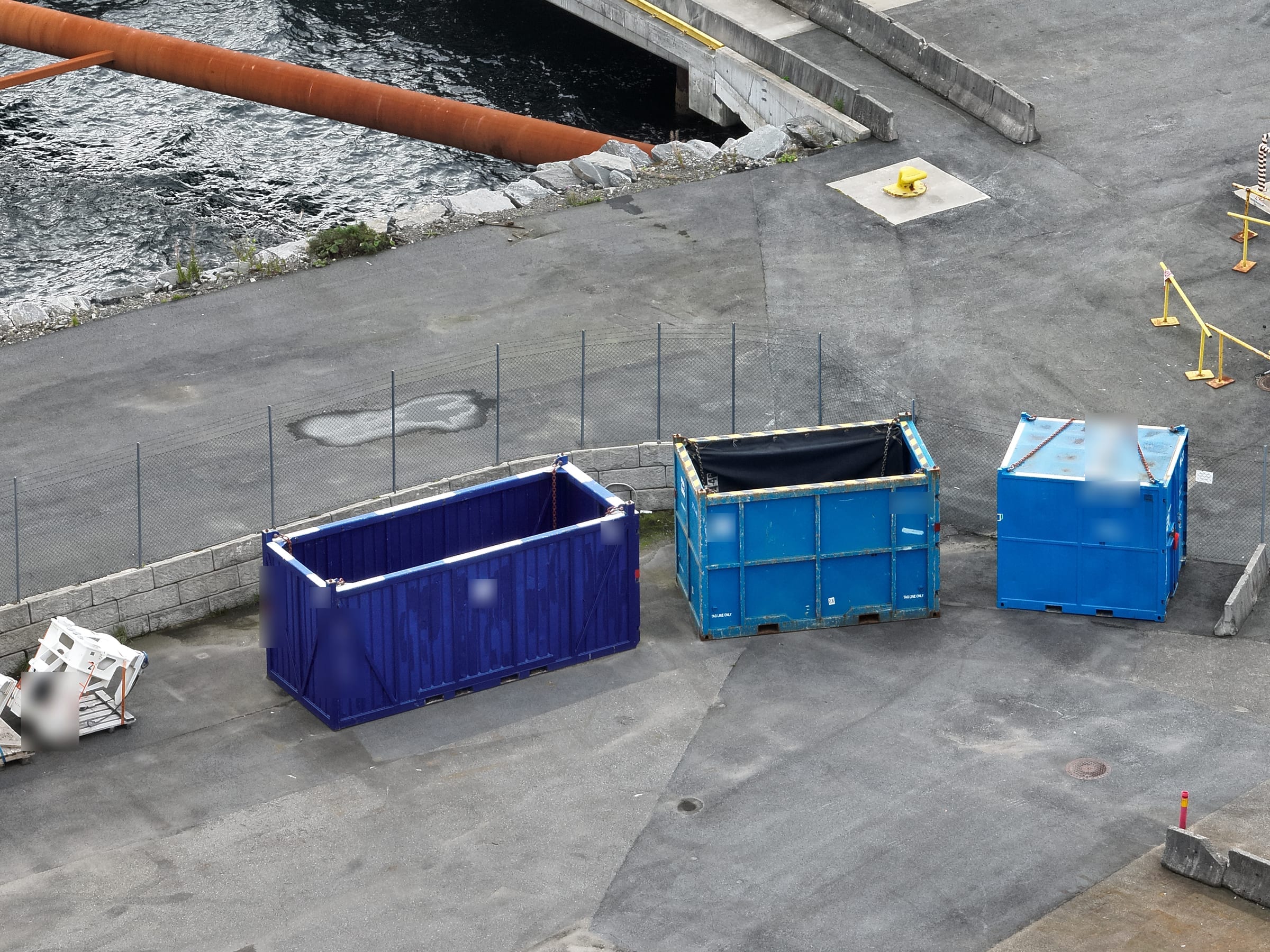
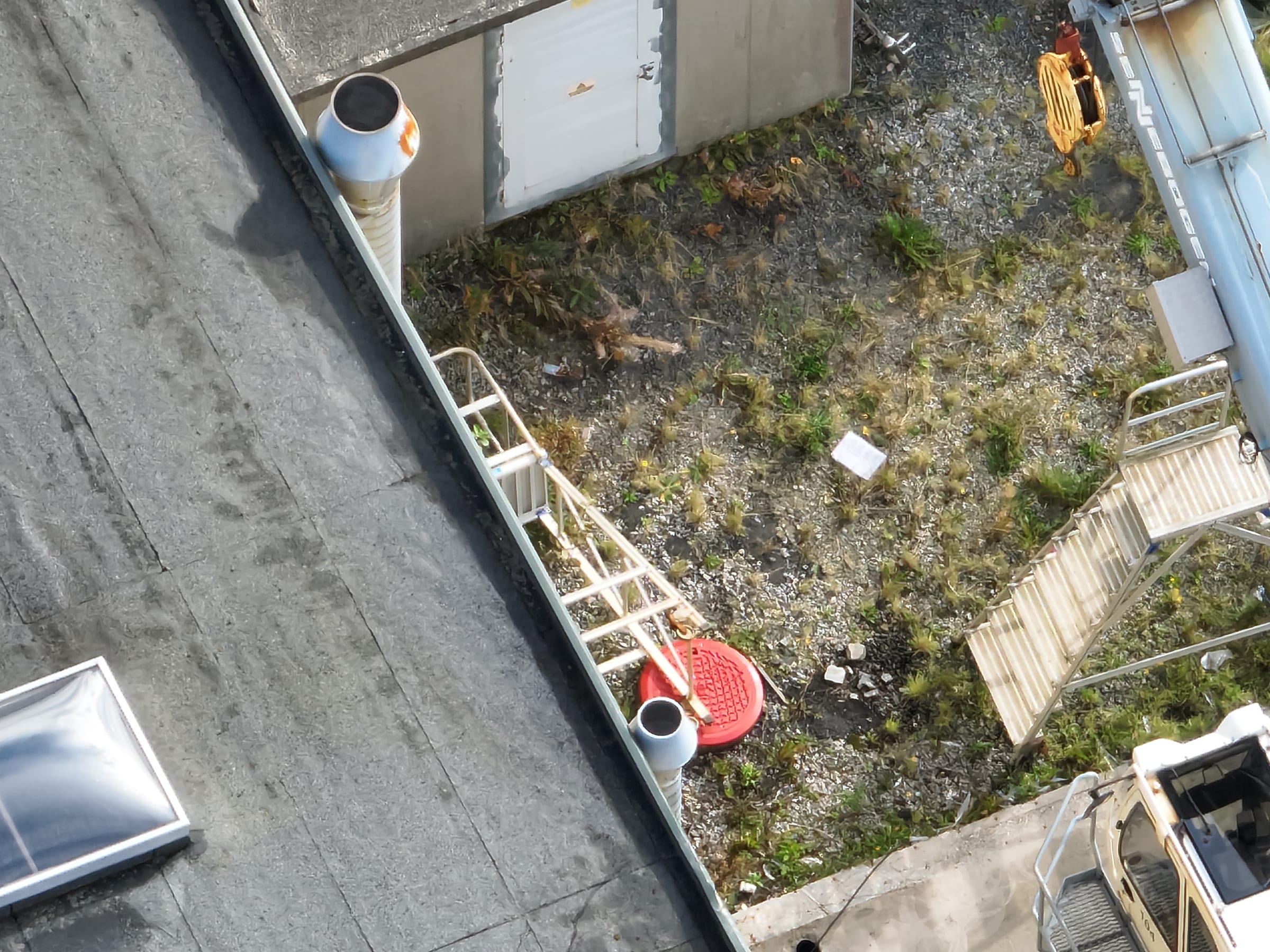
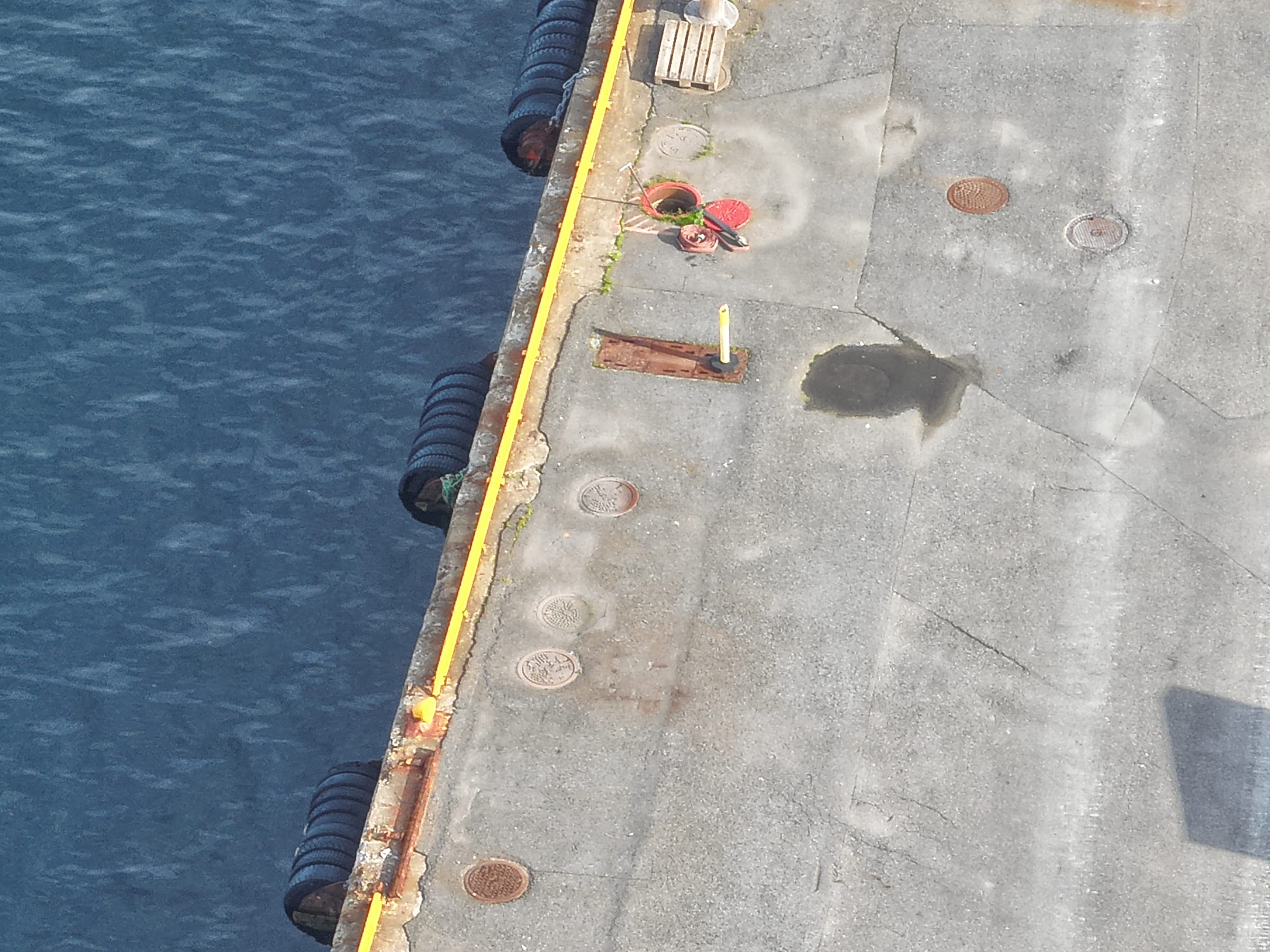
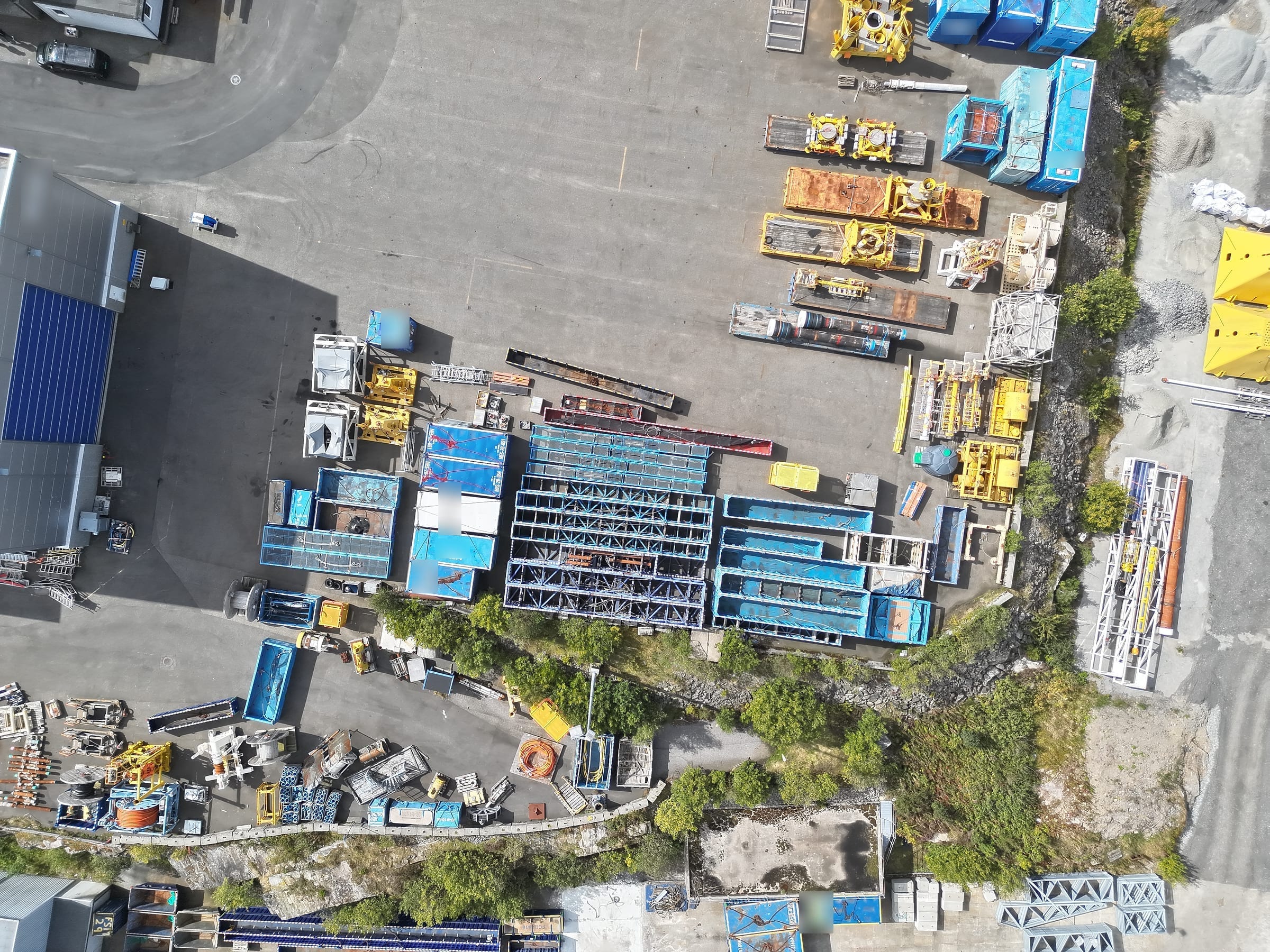
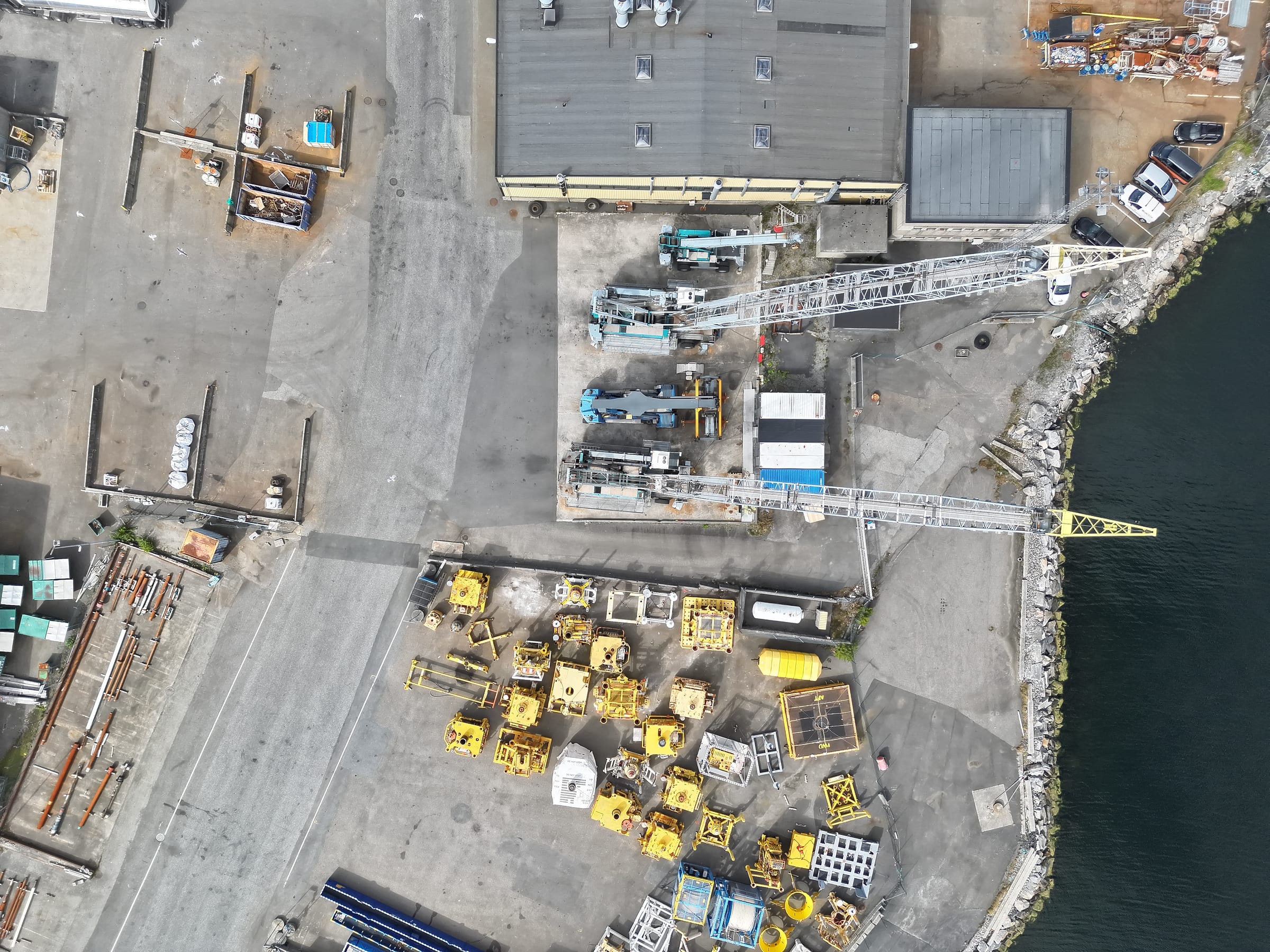
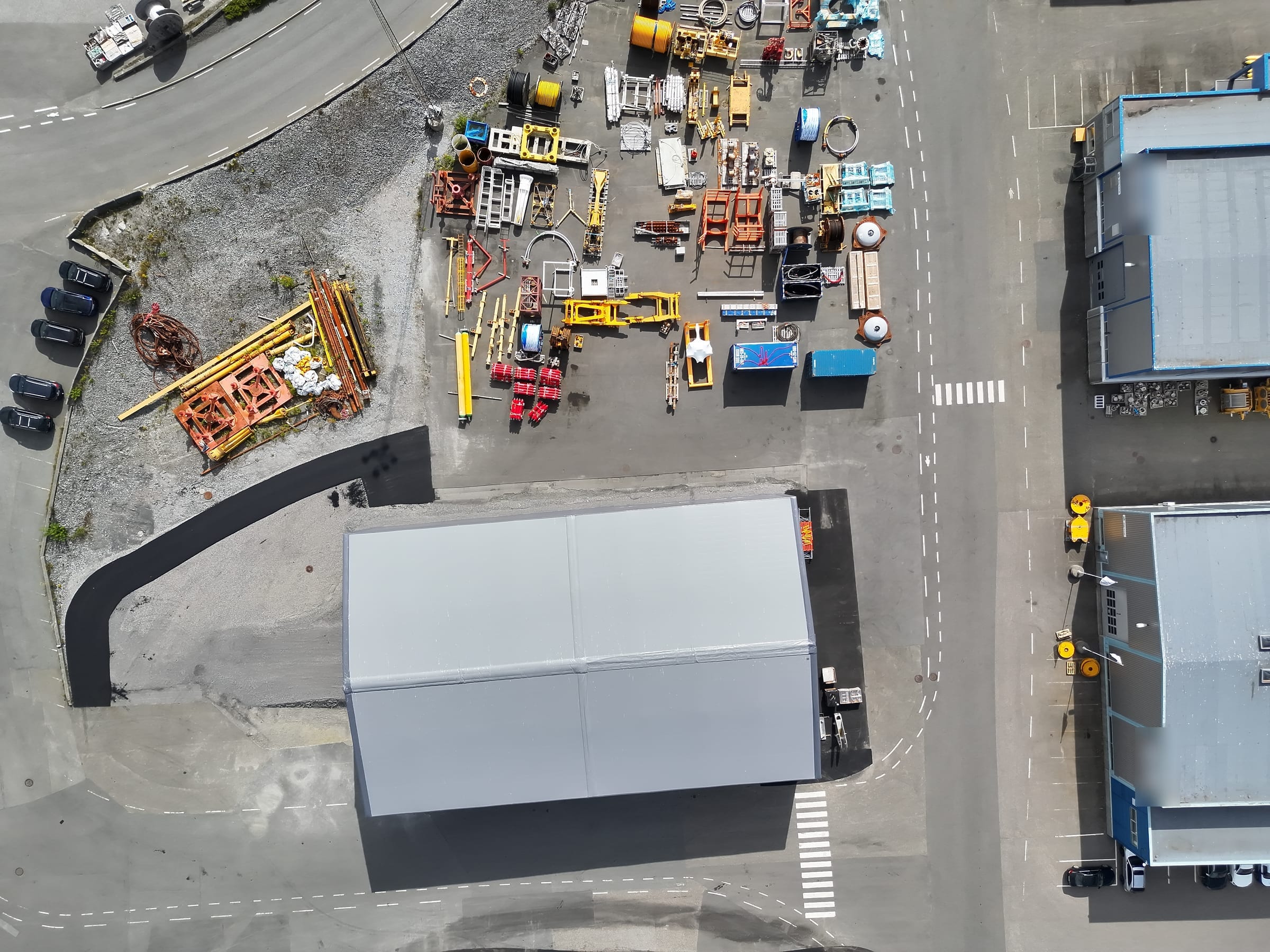
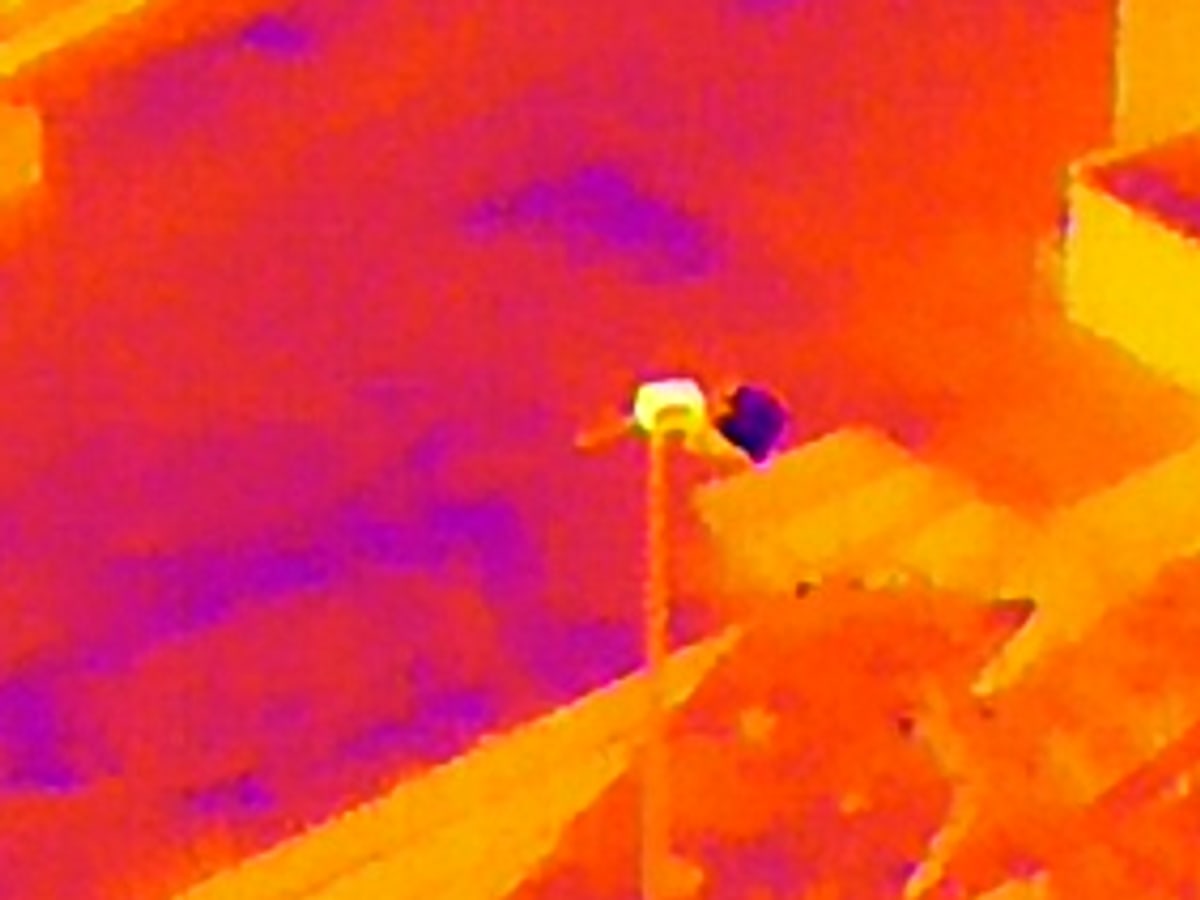
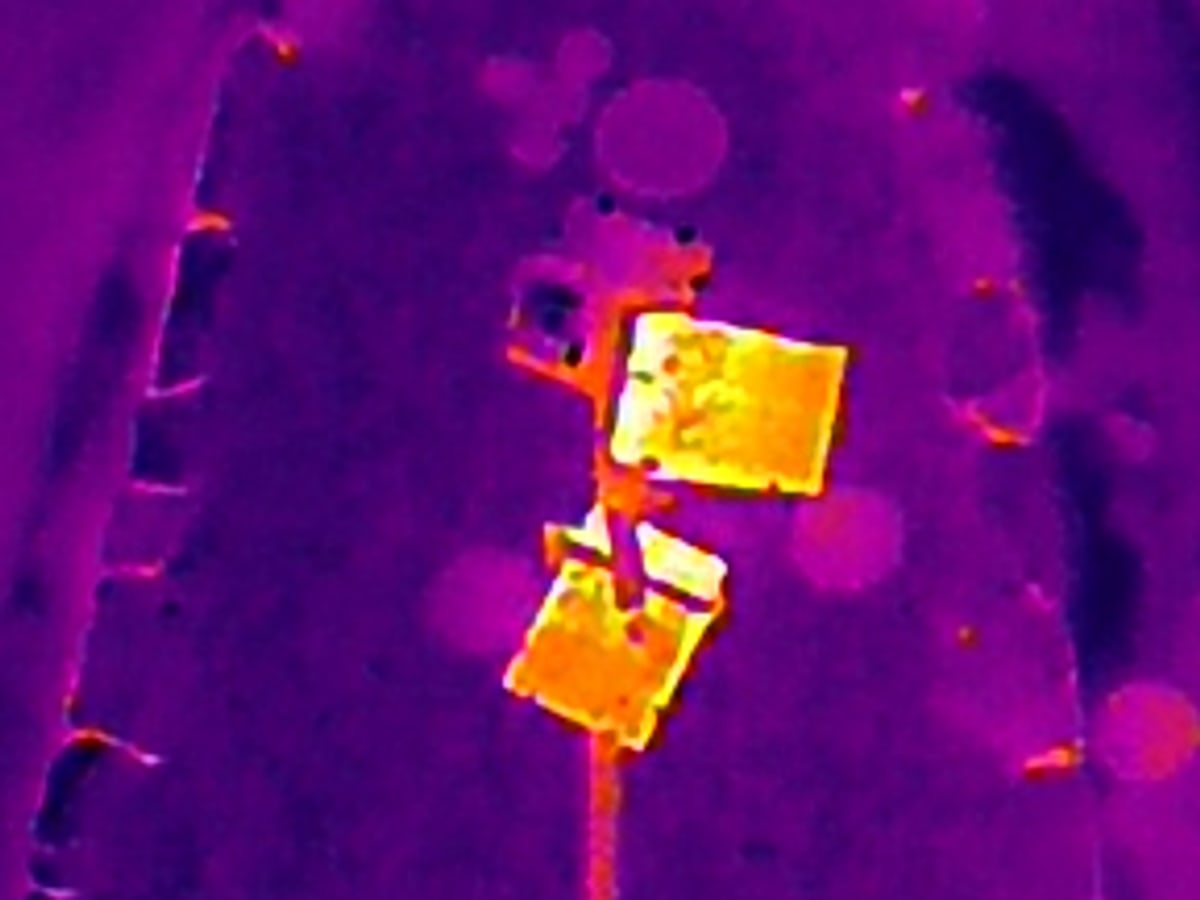
Drag the divider to see the thermal image.
Light masts 3 findings
Lamps that are not working or missing, seen after dark
Fences 3 findings
Gaps in and under the fence, and things too close to it
Fire hydrants 2 findings
Clear access, visible marking and intact covers
Muster points 3 findings
Marking, visibility and free space for an evacuation
Inspections we currently fly
- Light masts: damage, corrosion and lighting
- Fences: damage and objects too close to the fence
- Fenders: wear, damage, incorrect positioning and missing fenders
- Tank roofs: foreign objects, birds and nests, and other things that are hard to reach
- Underground and pillar hydrants: unobstructed, well-marked access
- Muster points: marked and unobstructed
- Thermal analysis of buildings
- Panoramic images as a site overview
- Spills on water
- Inspections on demand and during incidents
The reports
Excerpts from anonymised reportsWhat you get
- A faster start
- You start with an approved and documented structure instead of building one yourselves.
- Lower regulatory risk
- Operations run under our approval, with manuals and procedures revised every year.
- Your own expertise
- Your staff are trained and followed up over time.
- Room to grow
- The structure works for one system and for several.
Get in touch
Tell us what needs inspecting and we will send you a quote.